
Koenig & Bauer Durst Digital Packaging Print
  • Products
    • Folding Carton
      • VariJET 106
    • Corrugated Board
      • Delta SPC 130
      • CorruJET 170
  • Applications
  • Knowledge Base
    • Upcoming Events
  • About us
    • Careers
    • Contact
  • EN
    • DE
    • FR
    • ES
  • Click to open the search input field Click to open the search input field Search
  • Menu Menu
  • Link to LinkedIn
  • Link to Youtube
  • Drupa 2024
  • About us
  • Applications
  • Products
    • Folding Carton
      • VariJET 106
    • Corrugated Board
      • Delta SPC 130
      • CorruJET 170
  • Knowledge Base
  • Contact
  • EN
    • DE
    • FR
    • ES

How digital transformation is powering customer experience

Case Studies, General News

Jochen Sproll

By Jochen Sproll, Business Development Manager, Koenig & Bauer Durst

How digital transformation is powering enhanced customer experience and revenue growth

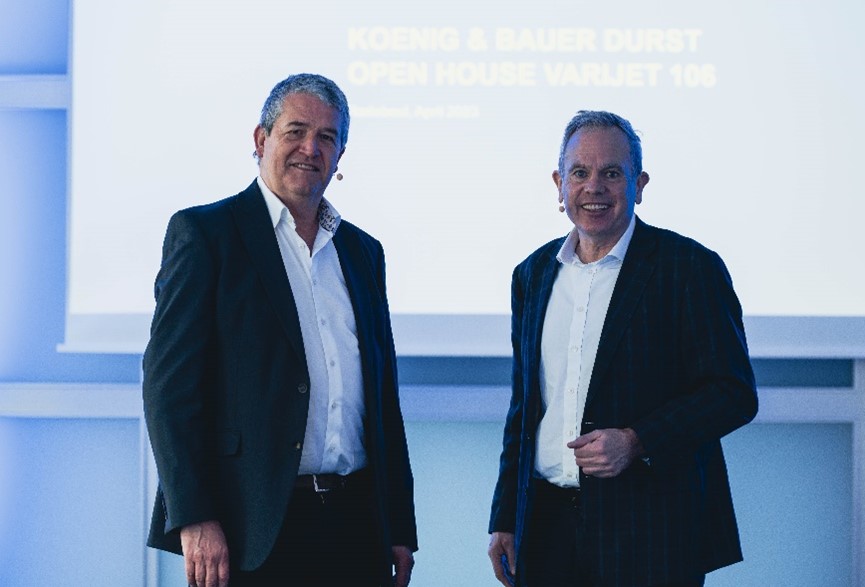
Industry innovators are always in for a highly educational, informative and inspirational SPC Open House at the Durst Innovation Center East in Lienz, Austria. We always want to ensure that the content is both fresh and with latest ‘news’, both from ourselves and for the industry in general.

Our last event had a focus on “Digital Transformation in Corrugated Packaging”. It explored key drivers shaping production demand. It considered, too, how digital technology responds in an agile and flexible way while also ensuring cost efficiency.

Attendees were told how demand for digital printing in packaging is growing in response to the proliferation of SKUs, increased interest in regionalization, enhanced product life cycle management, and the ability to keep pace with the ever-changing regulatory environment.

The result is the need to produce more jobs per day, meet faster turnaround times, deliver shorter run lengths, and manage planning complexity. There is also greater expectation for food safety and circular economy capabilities.

Digital production aids profitability with lower costs for shorter runs, optimised production, reduced waste, and obsolescence. It also requires less working capital and future-proofs production with water-based inks. It elevates customer experience and revenue growth via optimised print and total costs while delivering improved value for the customer.

This is partly due to existing and new trends bringing run lengths down (currently the average run length is 5,000 to 6,000 sqm), better utilization of conventional technology, and clearer total cost of ownership calculation of existing production volume to explore whether an investment will pay off.

For example, when comparing SPC to flexo, the break-even was found to be between 6,500 and 8,500 sqm. Digital printing was cheaper to produce and increased overall production output by 50% and productivity by 25%. The cost saving on digital addressable volume was €2.5m and the payback on the investment in SPC technology was two to three years.

Digital’s ability to focus on automation and standardization of processes with few touch points aids the understanding and optimization of the total cost of supply chain for customers. The streamlined workflow powers smooth operation and delivers a number of production gains:

  • Shorter lead times and faster reaction times.
  • Less complexity with the elimination of the plate process.
  • Process waste saving equals 160k sqm of board saved.
  • Ability to use a thinner top-liner equals 15% savings.
  • No need to manage set up for design changes.

Digital production supports a collaborative, close working, customer experience with brands. Its ability to produce new test packaging, designs and campaigns quickly enables a better understanding of marketing objectives. It allows the cost effective production of smaller batch sizes and eases the move to supply chain management and partnership (different pricing models based on value of supply chain costs and not volume of boxes produced).

There is also the greater possibility of expanding a brand’s added value applications. In fact, 50% to 80% of volume over time is for new added value applications in the Koenig & Bauer Durst customer base. They include mass customization, sequential barcodes, new product offerings on uncoated board and, as mentioned before, test and promotional packaging.

Kärcher, known for its high-pressure cleaners, is one international brand that has moved the majority of its printing requirements to digital. In 2022, 52% of its jobs were digital compared to just 1% in 2015. As a result, it now benefits from simple data handling with pre-press, uniformed colour consistency, time savings in production without additional costs for printing plates, decreased quantities but increased variants and frequent layout changes due to constantly legal requirements.

Enabling brands to make this transition are operations like Schumacher Group. The family-managed company with sites across Europe registered a record month for production on its Delta SPC 130 in March 2022. In 28 days the press completed 226 jobs and printed 1,346,954.56 sqm. 73% jobs were produced without primer.

Koenig & Bauer Durst supports operations such as Schumacher with comprehensive prepress training (profiling, ink saving, embellishment), operator training (press efficiency, quality, maintenance), sales training (application training, product offerings), business knowledge transfer and a proven technology with most automated, productive, single pass water-based presses suitable for food packaging.

Koenig & Bauer Durst also delivers responsive service and customer care with remote diagnostics and telephone service as well as software and workflow support to ensure highest level of uptime.

Talk to Koenig & Bauer Durst or its partners discover more about how to introduce these business benefits, and more, by transitioning to digital production.

Make sure our next SPC Open House in Lienz on 27-28 September is in your diary!

8. August 2023
https://www.koenig-bauer-durst.com/wp-content/uploads/2023/04/Jochen-Sproll.png 472 606 Helmut Kremers https://www.koenig-bauer-durst.com/wp-content/uploads/2023/02/koenig-bauer-durst.png Helmut Kremers2023-08-08 11:57:532024-01-09 11:58:09How digital transformation is powering customer experience

Why the time for digital print is now

Case Studies, General News

By Matthias Krautgasser, Senior Product Manager, Koenig & Bauer Durst

The time for digital printing is now.

That is one of the main takeaways from a white paper by Markus Witthaut, a senior scientist at Fraunhofer IML, Europe’s largest research organization covering all areas on logistics.

He said the benefits of digital printing are already there and will just become more and more relevant. He added: “Don’t wait. Go for digital printing now.”

The white paper on the complete supply chain management and logistics was created on behalf of Koenig & Bauer Durst.

It clearly showed digitization that comes with digital printing delivers benefits for converters and brand owners. Processes can be made faster by the quick exchange of information about new packaging designs, new print, as well as the status of the production order.

This approach delivers three major advantages for brand owners – the lead time is considerably quicker, design changes can be made rapidly and there is a greatly reduced risk of obsolescence.

These advantages can be very quickly introduced and capitalized on with the right software tools.

Efficient production with optimal results in the shortest possible time is delivered by the browser-based Durst Software Solutions. Durst Workflow combines data preparation, colour management and output preparation and allows multiple users with customizable permissions to work in parallel on the same database.

Production results are made more transparent by Durst Analytics. It gives users an at a glance overview of their printing systems via a web browser or an automatically generated email report. They can monitor production data such as material, ink consumption and productivity.

The complete processing of print orders and the sale of products and services is managed by the online Durst Smart Shop. The all-in-one solution digitizes and automates the sales and marketing process from the first customer contact up to the transfer of a print ready file to the production floor.

Individually or collectively these solutions can enable digital production to be responsively scaled up to meet demand.

They can also help generate increased profitability through the provision of the most highly automated and productive single-pass digital printing solutions on the market.

To discover more about how converters and brand owners can enjoy the benefits of digital print read the full white paper here: Supply-chain-improvements-with-digital-printing.pdf 

7. August 2023
https://www.koenig-bauer-durst.com/wp-content/uploads/2024/01/Matthias-Kruatgasser.jpg 602 602 Helmut Kremers https://www.koenig-bauer-durst.com/wp-content/uploads/2023/02/koenig-bauer-durst.png Helmut Kremers2023-08-07 11:59:092024-01-09 13:11:30Why the time for digital print is now

Compliance with future regulations

Case Studies, General News


By Dr Stefan Kappaun, Executive Vice President of Inks and Fluids, Durst Group

Inks safety, security and standards – our market offering

With regulations in food packaging continuing to tighten, we believe the cost and ability to comply with the future regulatory curve will be easier to achieve with water-based inks.

We also believe that the ever-changing regulatory environment means it is essential to eliminate as many process steps with third-party fluids as possible.

The design of our SPC inks means corrugated converters can print without using a priming fluid, if they chose, and there is no need for an additional overprint varnish fluid and process step.

We have achieved this through adding a sealing step in the water-based ink to give abrasion resistance, gloss effect and anti-slip characteristics.

Our initiatives have had the added environmental impact of being able to reduce paper consumption. The ink enables a ‘non-touch’ printing process with no analogue primer or OVP (Over Print Varnish) resulting in potential topliner savings of up to 20%. This design results in fewer humectants (substances that attract and retain moisture) and vaporable compounds compared to other water-based ink systems.

Another process that will become a bigger issue in the future is deinking – the removal of printing ink from the recovered paper during the paper recycling process. We, in tandem with the industry, will continue to work tirelessly to push the regulatory framework on this important topic.

Our food-safe, water-based inks currently conform to all regulatory standards – such as Swiss Ordinance List, Nestlé and Good Manufacturing Practice – and have achieved the UL ECOLOGO® Certification recognized as a gold standard for sustainability credentials. In general, external certifications are used by us to ensure compliance with even the most robust regulations for food safety, security and sustainability. We are convinced that our water-based inks will be more likely to comply in the future as regulations further tighten.

Meeting the regulatory framework for food safety, security and sustainability is enabled by including a cross-linkable water dispersible polymer in our inks that cannot migrate due to its molecular weight. The corresponding organically pigmented, water-based inks have very high-water contents. The speciality resin in combination with the aqueous carrier allows odour-free and robust printing. A sealing step included in the SPC dryer ensures good gloss and scratch resistance without overcoating.

And what about the future? We, as a world leader within food-safe ink research and development, will continue on-going testing for migration in extreme conditions to prove safety.

Whereas it is the responsibility of converters to test and ensure that they comply with industry standards, we will continue to offer expert advice and support them with testing.

4. August 2023
https://www.koenig-bauer-durst.com/wp-content/uploads/2024/01/Stefan_Kappaun_web.jpg 665 1000 Helmut Kremers https://www.koenig-bauer-durst.com/wp-content/uploads/2023/02/koenig-bauer-durst.png Helmut Kremers2023-08-04 11:49:472024-01-09 11:55:22Compliance with future regulations

Misinformation in the market

General News


By Robert Stabler, Managing Director, Koenig & Bauer Durst

Ink safety, security and standards – why they are so important!

On such an important topic as ink safety, security and recyclability, it is essential that all industry stakeholders – including our direct competitors – use facts and proof-points as the basis for their value proposition.

Sometimes this has not been the case. We know from first-hand experience that misinformation has been spread in the market, including about our own products and inks.

This can undermine confidence and the proactive work already undertaken by so many industry bodies, some of which we work with closely.

The reality is that inks have the potential to create ingredients and biocides that at certain levels of human consumption could be dangerous to health.

Regulatory standards are based on the latest scientific knowledge to define what is safe and what is not from a formulation perspective or how the ink behaves and migrates over its lifetime.

Rules are going to get tighter in the markets we serve – folding carton and corrugated. Without question, we know that converters need surety and confidence that their vendors are ahead of the regulatory change curve.

Our philosophy in developing our whole SPC digital printing system is to ensure that we can support converters to comply with the ever-changing regulatory environment by eliminating as many process steps with third party fluids as possible.

The design of the ink means converters can produce without using a priming fluid, if they chose, and there is no need for an additional overprint varnish fluid and process step. Our scientists have achieved this through adding a sealing step in the water-based ink to give abrasion resistance, gloss effect and anti-slip characteristics.

The ink is designed with a water-based polymer that is cross-linked and cannot migrate due to its molecular weight. As a result, converters are assured of being able to comply with all standards on ink formulation such Swiss Ordinance List and Nestlé standard and can comply to all major regulations related to migration for primary food packaging.

In the future, we are convinced that they will still comply as regulations tighten.

We – Koenig & Bauer Durst – will remain at the forefront of developments in technology and ensure that the highest standards are met.

In the coming months, in a proactive approach we will be sharing our global expertise – backed by two giants of packaging and printing – across the industry.

Let’s all work together. We can make a difference. Digital has a huge role to play for folding carton and corrugated board markets in the future.

24. July 2023
https://www.koenig-bauer-durst.com/wp-content/uploads/2023/04/Robert-Stabler-web-1.jpg 615 854 Helmut Kremers https://www.koenig-bauer-durst.com/wp-content/uploads/2023/02/koenig-bauer-durst.png Helmut Kremers2023-07-24 11:10:232024-01-09 11:49:16Misinformation in the market

Importance of 1000 dpi

General News, Innovation

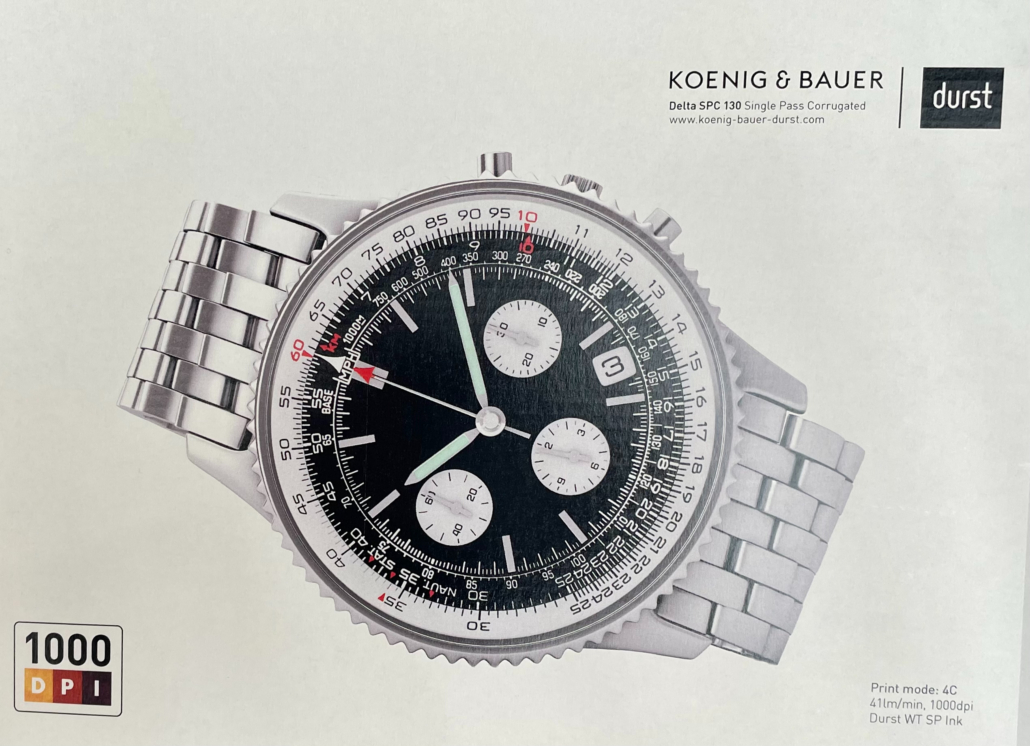
1000 dpi example print

By Matthias Krautgasser, Senior Product Manager, Koenig & Bauer Durst

More corrugated work shifts to digital with 1,000 dpi enhancement

We are proud to announce the launch of 1,000 dpi printing on our Delta SPC 130 platform as part of our continuous quality enhancements to help customers.

With the resulting further improvements of fine details and text sharpness – most noticeable in smaller fonts – we believe this is a significant step forward for the corrugated packaging markets in which we serve through our Delta SPC technology.

For customers there are huge benefits with a multitude of new applications opening up for converters, not least the fact that printing at 1,000 dpi provides optimization to litho quality requirements.

Although this development has been designed for our new Koenig & Bauers Durst Delta SPC 130 Eco + model, it will be available for all existing presses as an upgradeable software option.

From the results we have already seen, this is hugely important for our customers. The big plus is that it enables them to free up work on their offset presses by transferring even more jobs to digital production in corrugated markets.

It’s another reason why converters must think digital in today’s marketplace.

Contact me on matthias.krautgasser@koenig-bauer-durst.com to find out more.

29. June 2023
https://www.koenig-bauer-durst.com/wp-content/uploads/2024/01/Image.jpeg 1840 2540 Helmut Kremers https://www.koenig-bauer-durst.com/wp-content/uploads/2023/02/koenig-bauer-durst.png Helmut Kremers2023-06-29 11:31:442024-01-09 11:36:02Importance of 1000 dpi

Open House of Delta SPC 130

Events, General News
Read more
21. June 2023
https://www.koenig-bauer-durst.com/wp-content/uploads/2023/05/Matthias-Krauktgasser.jpeg 2292 2431 Helmut Kremers https://www.koenig-bauer-durst.com/wp-content/uploads/2023/02/koenig-bauer-durst.png Helmut Kremers2023-06-21 09:52:562023-07-04 08:51:32Open House of Delta SPC 130

Why the time is right for carton converters to capitalise on digital transformation

Case Studies, General News

Key mega trends shaping carton manufacturing and how the latest technology responds shared at customer event


The trends and drivers shaping the future of carton manufacturing were identified and discussed last month when Koenig & Bauer Durst invited carton printers to Radebeul, Germany, home of the sheetfed production centre.

Around 100 interested carton converters, from across Europe and North America, listened to the wide-ranging discussions and learned more about Koenig & Bauer Durst’s solution to help them capitalise on emerging opportunities.

VariJET 106 Open House keynote Speaker Dr Sean Smyth (left) with Robert Stabler at the event

VariJET 106 Open House keynote Speaker Dr Sean Smyth (left) with Robert Stabler at the event


After Ralf Sammeck, Member of the Board at Koenig & Bauer with responsibility for Sheetfed, joined Koenig & Bauer Managing Director Robert Stabler to officially open the event, Dr Sean Smyth, print technologist and consultant for Smithers, listed the mega trends influencing today’s packaging environment.

They included sustainability and carton production’s place in a circular economy. Also detailed were the advantages of digital printing in eliminating the need for plates, water, and chemistry, and reducing set up time and waste, while improving responsiveness to demand.

The impact of micro and macroeconomics were explored – demographic shifts from the growth in affluent, educated consumers, to changing population age profiles and the rise in individual preferences. Sean expanded on how technology specific to packaging is evolving to deliver higher quality in an increasingly agile and responsive way.

Legislation is also shaping printing requirements both in terms of on pack information and post use disposal while enhanced supply chain management and track and trace capabilities enable improved stock oversight and brand protection.

These, he said, were set against a back drop of positive growth for carton makers in 2022. Growth that is expected to continue with cartons predicted to reach the equivalent of a billion A4 prints by 2028 and digital carton volumes in North America and Europe predicted to enjoy a compound annual growth rate of just under 20% to 2027.

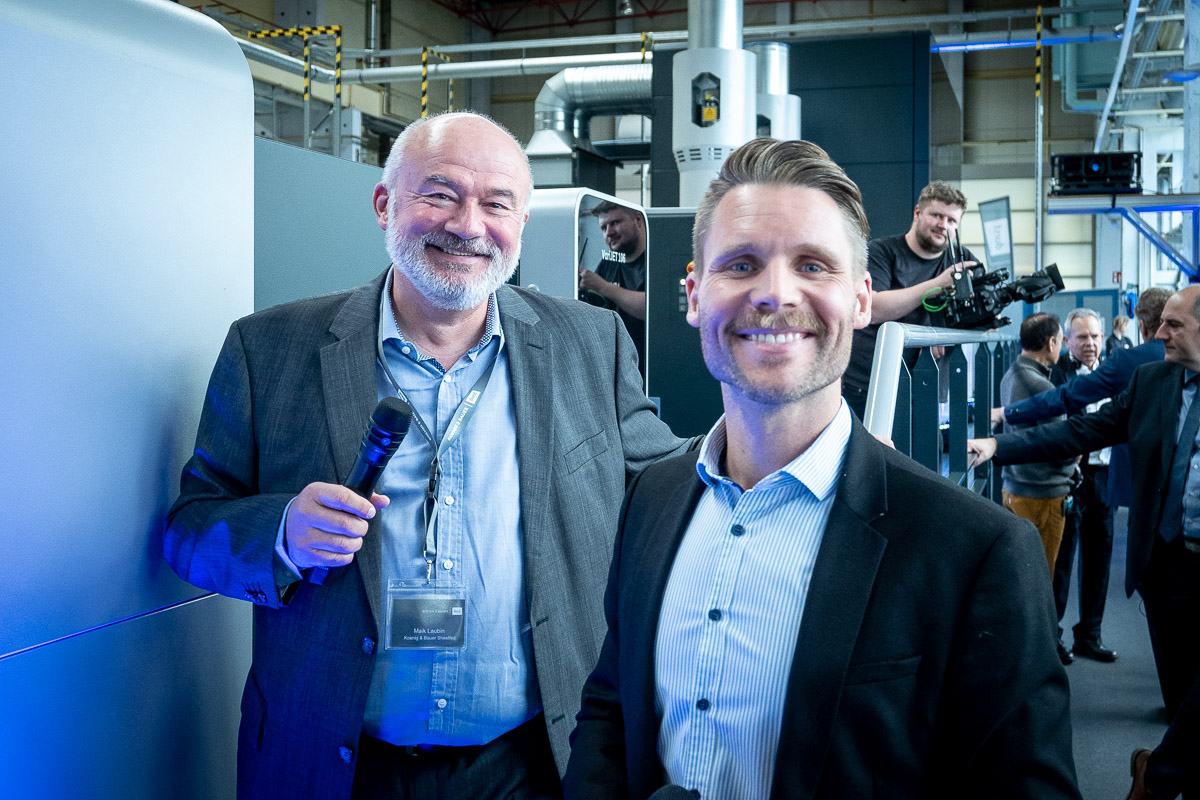
Maik Laubin (left), Global Sales, VariJET 106, and Pierre Hertzell, VariJET 106 Product Manager presented at the event

Maik Laubin (left), Global Sales, VariJET 106, and Pierre Hertzell, VariJET 106 Product Manager presented at the event


At the same time average runs are falling with operations under pressure to manage many more short-medium runs. Sean pointed out that a shift in all carton volume from 26% to 29% equates to 20 million more jobs and asked: “How do you manage more jobs in your shop effectively?”

Robert Stabler detailed how to build a business case in digital printing in folding carton markets and outlined key solutions developed for carton converters.

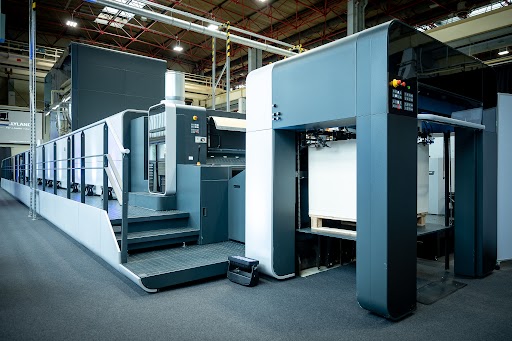
He highlighted how the latest technology in the modular VariJET 106, that can utilise offset and flexo functionality, helps future proof investment. The B1 5,500sph press platform for folding carton packaging makes simple work of limited-run seasonal and personalised, targeted packaging.

A water based, food safe and deinkable ink set, developed with exceptional rub resistant characteristics, ensures food safe production meeting current and future regulatory and environmental standards. The most recent of which is the updated The Packaging and Packaging Waste Directive that aims to ensure that all packaging is reusable or recyclable in an economically feasible way by 2030.

VariJET 106: Leveraging the know-how and expertise of Durst and Koenig& Bauer, two giants in the printing and packaging industry

VariJET 106: Leveraging the know-how and expertise of Durst and Koenig & Bauer, two giants in the printing and packaging industry


The VariJET 106 leverages the know-how and expertise of Koenig & Bauer’s leadership in offset printing with Durst’s digital inkjet prowess. This enables the delivery of offset quality while harnessing the flexibility of digital allowing customers to build new, highly responsive business models. Based on Koenig & Bauer’s standard high performance Rapida 106, it features standard components for infeed, priming, coating and delivery. It incorporates Durst printhead electronics, inkjet expertise, proprietary workflow, and RIP technology.

Highly automated file submission, approval and delivery to the press is managed by Durst Workflow. It also automates unique coding and numbering applications for track and trace applications. The optional Smart Shop module provides a full e-commerce front end, including design and job submission tools while the comprehensive analytics tool set, reports detailed performance data and KPIs that aid press optimisation.

All of which help contribute to a convincing TCO (total cost of ownership) when evaluating whether an investment will pay off, where the volume break even points are to ensure more accurate costings, and how the most effective technology utilisation can be achieved. Other benefits such as how digital just-in-time print production can help reduce storage costs and obsolescence were also explored.

Attendees watched as the press was put through its paces and seamlessly ran five carton jobs in just over 15 minutes, which included job-changes on the fly at a top speed of 5,500sph. “Don’t blink or you’ll miss it!” Three featured the same stock with design and ink coverage changes. Next was a spot varnished job on a different board with a changeover of varnish plate. The final job included board size change and another spot varnish.

Delegates witnessed job-changes on the fly at top speeds of up to 5,500sph on the VariJET 106

Delegates witnessed job-changes on the fly at top speeds of up to 5,500sph on the VariJET 106


The event included updates on the installation of the first beta press that will be up and running this month (May). Preparations are underway to install a second in June and a commercial customer is planning production from Q3. Other systems are under construction.

5. May 2023
https://www.koenig-bauer-durst.com/wp-content/uploads/2023/05/Robert-und-Keynote-Speaker.jpg 587 865 Helmut Kremers https://www.koenig-bauer-durst.com/wp-content/uploads/2023/02/koenig-bauer-durst.png Helmut Kremers2023-05-05 14:45:022023-05-16 14:52:18Why the time is right for carton converters to capitalise on digital transformation

Koenig & Bauer Durst ramping up VariJET 106 production as digital folding carton demand grows

Events, General News
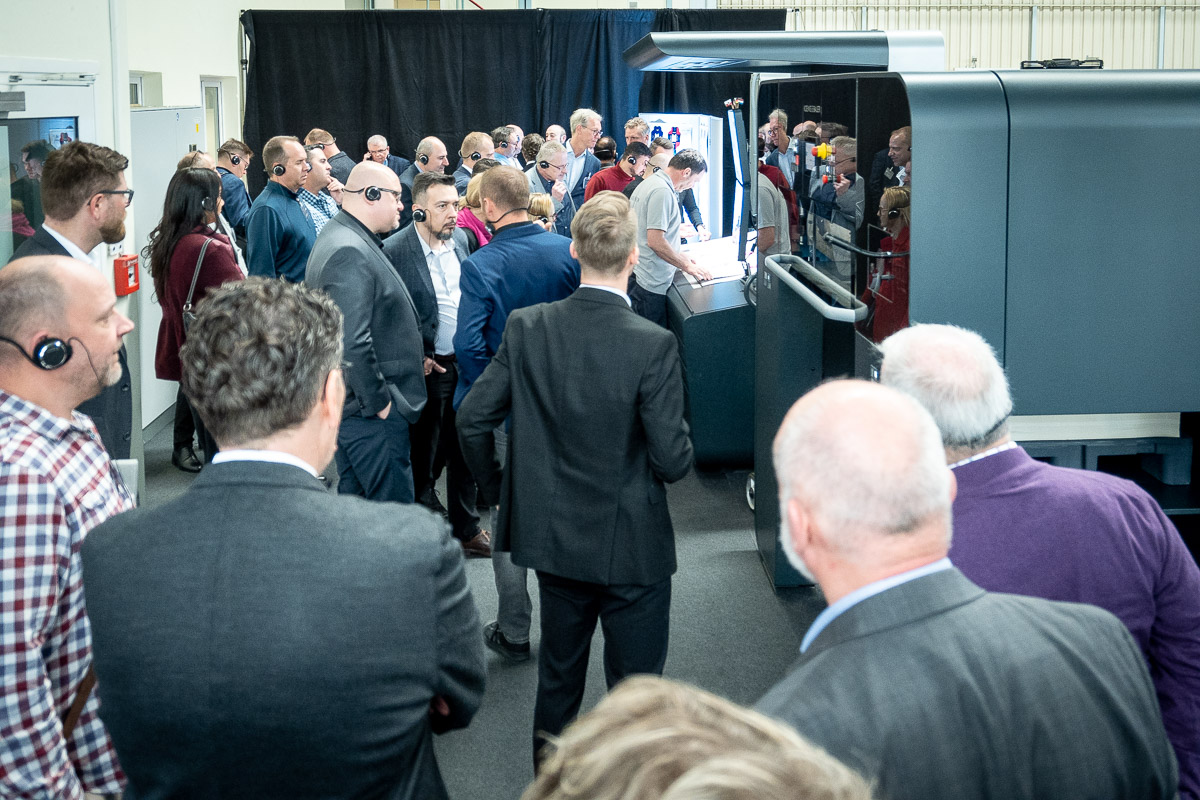
Delegates had a close-up view at the VariJET 106 Open House

Delegates had a close-up view at the VariJET 106 Open House


  • Koenig & Bauer Durst announces customer and beta site details
  • Built on market-proven technology, the VariJET 106 aligns with customer individual requirements
  • Building program accelerates to keep up with folding carton digital printing growth


Würzburg, Germany 04.05.2023

Koenig & Bauer Durst is scaling up its VariJET 106 build program to cope with high demands for digital production in folding carton markets, which it expects to accelerate further this year. The announcement comes as two beta sites get under way and the first commercial customer will start live production in the second half of the year.

Printing starts in May at a first beta site of the VariJET 106 B1 single pass digital press for folding carton markets. A second beta test customer, also in central Europe, will begin a few weeks later. The VariJET 106 is the first joint development between Durst and Koenig & Bauer. The announcements were made at Koenig & Bauer Durst VariJET 106’s Open House at Sheetfed Division of Koenig & Bauer where more than 60 delegates have been hosted in Radebeul, Germany, on April 26-27.

Robert Stabler, Managing Director of Koenig & Bauer Durst, said: “Built on market-proven technology, the VariJET 106 installations represent huge statements to the market – and we are really pleased with the substantial progress that has been made. Production is being ramped up and new machines will become available in the second half of 2023 on the back of the relatively high demand we are witnessing.”

He added: These presses are tailored to individual requirements and afford a major opportunity for those companies that can optimize their production and reduce costs while offering new high added value business models. Challenges like these are what our VariJET 106 has been developed to answer. The VariJET 106 combines the best of both worlds of Koenig & Bauer’s Rapida 106 technology and all the digital know-how and expertise of Durst. It brings together the strengths of digital inkjet and classic offset printing.”

Koenig & Bauer Durst’s VariJET 106 is equipped to be able to address a wide range of applications. The press produces up to 5,500 sheets per hour. It uses water-based inks that comply with all the main food security standards. The inks are also de-inkable which is important to future proof an investment in the light of tightening legislation around recyclability and reusage rates.

Industry analyst and commentator Dr Sean Smyth was the keynote speaker at VariJET 106 Open House in Radebeul. Sustainability, waste reduction targets and potential new European regulations on recyclability among the topics. Backing up the production demos, there were expert discussions on all facets of the printing process including a deep dive into how workflows and analytics support customers to cost effectively manage high volumes of shorter run length print jobs.

29. April 2023
https://www.koenig-bauer-durst.com/wp-content/uploads/2023/05/unnamed.jpg 341 512 Helmut Kremers https://www.koenig-bauer-durst.com/wp-content/uploads/2023/02/koenig-bauer-durst.png Helmut Kremers2023-04-29 11:22:092023-05-16 14:46:44Koenig & Bauer Durst ramping up VariJET 106 production as digital folding carton demand grows

Supply Chain Management in Digital Folding Carton Printing – Benefits of a Holistic Evaluation

General News, Innovation

Diversification of the product range demanded by the packaging market means that print companies face a constant increase in the share of short and medium runs. If these jobs are to be produced sustainably and efficiently, an objective and holistic comparison of the print and process costs is imperative. Against this background, Koenig & Bauer Durst has teamed up with the Fraunhofer Institute for Material Flow and Logistics (IML) to examine the opportunities for and challenges facing digital and offset printing from the supply chain perspective. Senior product manager Oliver Baar and strategy and business development manager Jochen Sproll from Koenig & Bauer Durst explain the conclusions of this analysis and what the results mean for the industry as a whole.
The industry is looking back at a few turbulent months. Where do you see the biggest challenges confronting printers today?

Oliver Baar: The most significant aspect is almost certainly substrate availability, where we can even speak of paper rationing in some cases. Shortages like this drive cost pressures, but the print companies are neither willing nor indeed able to pass on the full additional cost to their customers. At the same time, the folding carton market is moving in the direction of ever shorter runs, shorter product lifecycles and even greater diversification. And last but not least, printing companies, too, are struggling with the general shortage of qualified employees and the massive rise in energy costs.

Short runs – is that not actually a point where digital printing could make use of its particular strengths?

Jochen Sproll: Yes, of course. But we wanted to look at the situation in more detail, and to consider the whole supply chain rather than just the printing costs. Our focus was therefore also directed at, among other things, the current developments and the cost of total value chain waste. It is important to keep an eye on storage costs and not just on waste during the production process. These are all factors that determine whether a particular run length can be produced more efficiently in a digital or offset process.

How exactly did you perform the analysis?

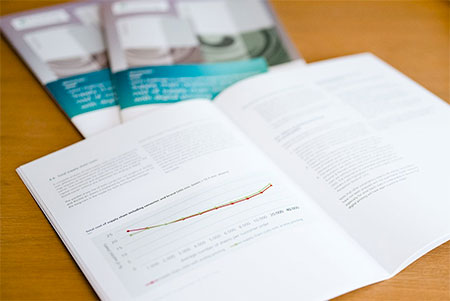
Supply Chain Management in Digital Folding Carton Printing

The whitepaper directs its focus at the entire value creation chain covered by folding carton production and examines the conditions under which digital printing is able to make use of its strengths

Jochen Sproll: First of all, it was very important for us to work on this project together with an external partner with corresponding supply chain expertise, in order to obtain a truly objective picture – and we found that partner in the Fraunhofer Institute for Material Flow and Logistics in Dortmund. We then set about developing a calculation model reflecting the entire supply chain. This model was fed with real production data from a printing company, with data relating to the digital printing process from us, and with information covering the whole logistics and supply chain side from Fraunhofer.

Oliver Baar: Being able to work with real production data from an actual printing company brought great benefits. The company granted us unfiltered insights into its processes and its cost and run length structures, which meant that, instead of a purely theoretical evaluation, we could produce a real-life case analysis for an industrial application. This makes the study far more than just a comparison of machine costs – instead, it draws its comparisons across the entire production process, including the associated supply chain. It is simply the case that the upstream and downstream processes, in particular, must play a significant role in any well-founded comparison. And that is what makes the whitepaper so exciting.

Why is that so important?

Oliver Baar: Well, there is no doubt about the huge advantages of digital printing. It is fast, it is flexible and it is individual. There are, however, also potentially problematic factors. Let’s just think about the logistics, for example. If you are producing more and more small jobs, that will also mean more transport processes. On the other hand, digital printing enables you to avoid unnecessary overproduction and waste. Both aspects must be taken into account in a comparison. And that is why I believe that the study that we have conducted into this is objective and valuable to brands and converters as they assess their waste and sustainability credentials.

Does sustainability also play a role?

Jochen Sproll: Definitely! In two respects, in fact. Sustainability is one of the three pillars of Koenig & Bauer’s Exceeding Print strategy, but at the same time also one of the key demands coming from our customers in the market – and that with the expectation of clear proof by way of certifications or the like. This means that our task as a press manufacturer is to offer our customers not only a technically optimal solution, but also the best solution for sustainable production. And in this context it becomes evident, for example, that digital printing with its short runs and reduced makeready times enables considerable savings – if fewer waste sheets are thrown away during makeready, we are also wasting less ink and substrate. What’s more, both print companies and brand owners can reduce their warehouse capacities if overproduction is avoided, and there are no additional products to be held in intermediate storage and possibly sent to waste after all at a later date. These savings are, of course, effective in terms of both costs and sustainability.

“Our task as press manufacturer is to offer our customers not only a technically optimum solution, but also the best solution for sustainable production.” – Jochen Sproll

When all these factors are taken into account, for which run lengths does digital printing have an edge?

Jochen Sproll: It’s not possible to generalise, of course. That said, our analysis did reveal that, after taking all process costs into account, a digital press like our VariJET 106 can actually be more profitable for medium runs. People tend to consider just the costs of printing. The threshold below which it becomes meaningful to choose a digital press is then often found at around 3,000 sheets. If we consider the overall process costs, however, the break-even point shifts to run lengths totalling between 6,000 and 10,000 sheets.

Oliver Baar: And that, in turn, opens up a whole new range of options for a print company’s existing offset presses. The investment in a digital press must not be viewed in isolation, because it has the potential to increase the overall volume of production. If a company takes short runs out of its offset process and transfers them – for example – to a VariJET, it achieves three things: in addition to the various benefits that have already been mentioned several times, the additional option of digital printing enables the company to enhance the portfolio of services it offers to customers, and at the same time to produce higher volumes at lower costs using its existing presses. A process evaluation that takes the company’s entire production output into account is immensely important for such a decision.

But that also goes to show that the decision to embrace digital printing means more than just the installation of another press. Do print companies also need to reorganise their in-house processes if they take this step?

Oliver Baar: Definitely. To be able to exploit the benefits of digital printing to the full, internal processes must also be adapted accordingly – similarly digitised, so to speak. You are unlikely to find people still walking around with paper job dockets in their hands nowadays, but a leaner workflow brings benefits for overall production. The decisive point is: if my digital press is going to be printing more jobs than I used to handle in offset, my fixed costs per job cannot remain constant. Adapting my organisation to process more jobs also means accelerating the passage of each individual job through the company – through automation, with workflow systems, via a web-to-print shop, by way of effective reporting. It represents a demand that digital printing must satisfy, but also an opportunity for business as a whole.

Jochen Sproll: Optimum use of the technology triggers a chain reaction: brand owners can call up smaller batches, the print company is in a position to produce them efficiently, less intermediate storage capacity is needed and the risk of obsolescence is minimised. In this way, less waste is produced and the result is a more environment-friendly overall process.

“The investment in a digital press has the potential to increase the overall volume of production.” – Oliver Baar

Does the experience gained in folding carton production permit conclusions to be drawn for other market segments?

Jochen Sproll: I think so, yes. In corrugated packaging, for example, we have a very similar situation. This is why it makes sense to include the factors of waste and flexo plate costs in the direct cost comparison in order to obtain a more realistic picture of the full value creation chain in this case as well. Even the substrate itself is a relevant variable, because the contactless digital printing process by the Delta SPC 130 enables thinner topliners to be used without limiting the functionality of the corrugated packaging. On the other hand, the ink costs do, of course, become higher, but they will eventually play only a marginal role in the overall evaluation. Therefore: it always pays to factor the entire value creation chain into your analysis.

10. March 2023
https://www.koenig-bauer-durst.com/wp-content/uploads/2023/03/SupplyChainManagement-interview.jpg 845 1018 Helmut Kremers https://www.koenig-bauer-durst.com/wp-content/uploads/2023/02/koenig-bauer-durst.png Helmut Kremers2023-03-10 09:54:142023-03-10 09:58:41Supply Chain Management in Digital Folding Carton Printing – Benefits of a Holistic Evaluation

Time to benefit from the production gains digital transformation

Events, General News, Innovation

By Jochen Sproll, Business Development Manager, Koenig & Bauer Durst

Read more

22. February 2023
https://www.koenig-bauer-durst.com/wp-content/uploads/2023/02/spc-130-open-house.jpeg 600 800 Helmut Kremers https://www.koenig-bauer-durst.com/wp-content/uploads/2023/02/koenig-bauer-durst.png Helmut Kremers2023-02-22 17:10:442023-04-06 12:30:35Time to benefit from the production gains digital transformation
Page 7 of 11«‹56789›»
Search Search

Product News & Innovations

  • Digital Production Improvements – Supporting Customers Every Step of the Way25. March 2026 - 15:56
  • Rethinking print: where digital meets offset for new growth12. March 2026 - 10:02
  • Atlantic Packaging Takes ‘Best in Class’ with Delta SPC 130 Technology
    Atlantic Packaging Takes ‘Best in Class’ with Delta SPC 130 Technology24. February 2026 - 16:30
  • supporting customers worldwide life as a project management lead
    Supporting Customers Worldwide: Life as a Project Management Lead11. February 2026 - 13:24
  • Why the future is bright for folding carton packaging27. January 2026 - 13:02

Case Studies

  • Smurfit Westrock Herzberg takes production to a new level with a top-of-the-line digital printing machine.16. January 2026 - 11:47
  • New regs – the big steps for converters to take now!12. September 2025 - 11:06
  • Are you riding the wave of water-based digital printing technology?18. June 2025 - 10:34
  • Banknotes to VariJET 106 – My Journey in Print17. April 2025 - 9:50
  • Enhancing the consumer experience10. April 2025 - 9:29

Events & Happenings

  • open house video
    VariJET 106 Open House on April 28 or 29 in Radebeul. Join us!16. March 2026 - 17:23
  • Spotlight on Thailand – See us at Pack Print International!12. September 2025 - 11:01
  • Open House Event Featured in the Folding Carton Industry Magazine14. July 2025 - 14:14
  • Inspirational insights underscoring the power of innovation2. July 2025 - 16:00
  • Sparking new ideas in folding carton with VariJET 10622. April 2025 - 11:02

Koenig & Bauer Durst GmbH
Friedrich-Koenig-Str. 4
97080 Würzburg
Germany

Phone: +49 931 909 0
Email: info@koenig-bauer-durst.com

Koenig & Bauer Durst: digital packaging printing

CONTACT
CAREERS
LEGAL NOTICE
DATA PRIVACY STATEMENT
GENERAL TERMS AND CONDITIONS

Koenig & Bauer Durst: digital packaging printing

Koenig & Bauer Durst GmbH
Friedrich-Koenig-Str. 4
97080 Würzburg
Germany

Phone: +49 931 909 0
Email: info@koenig-bauer-durst.com

CONTACT
CAREERS
LEGAL NOTICE
DATA PRIVACY STATEMENT
GENERAL TERMS AND CONDITIONS

© Copyright - Koenig & Bauer Durst
  • Link to LinkedIn
  • Link to Youtube
Scroll to top Scroll to top Scroll to top